Johannesburg – Standard Bank today announced that its Sustainability Academy has trained over 10,000 entrepreneurs and business owners across 15 African markets in its first year of operation, and has secured co-funding from DEG Impulse, supported by the German Federal Ministry for Economic Cooperation and Development (BMZ), to expand the programme through 2028.
The partnership, valued at R3.8 million and covering approximately 50% of the Academy's operating costs, reflects the growing role of collaboration between the private sector and development finance institutions in advancing sustainable economic growth across Africa. As countries continue working towards the objectives of the Paris Agreement, investment in practical sustainability skills is becoming increasingly important to unlocking economic opportunity and business competitiveness.
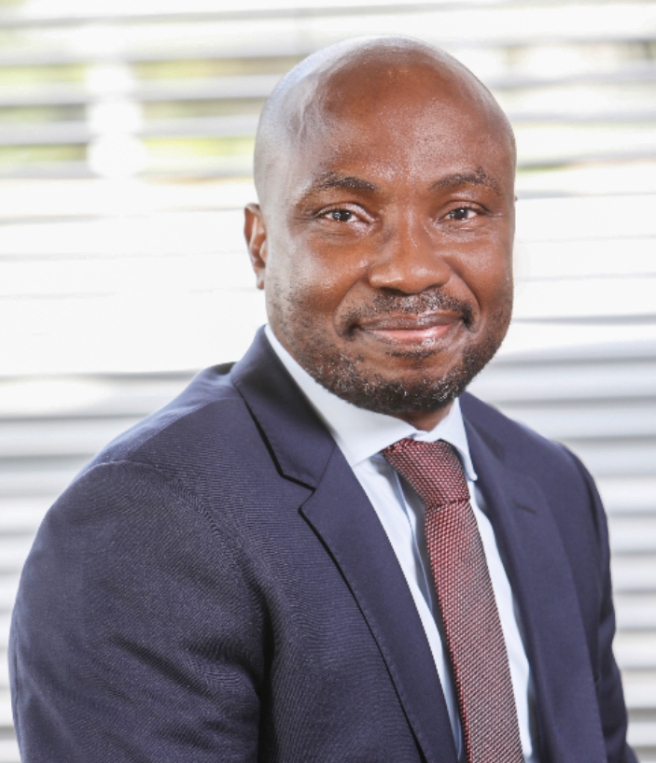
"While Standard Bank has committed to mobilising over R450 billion in sustainable finance by 2028, finance alone is not enough," said Dr Manessah Alagbaoso. "What we need are businesses that can identify sustainability opportunities, develop credible business cases and access the capital available to them. Over the past year, we have seen growing interest from clients seeking to implement initiatives in areas such as renewable energy, climate-smart agriculture and resource efficiency. The Sustainability Academy helps build the knowledge and confidence needed to turn those opportunities into action."

•Head, Business Ecosystems & Sustainability for Business and Commercial Banking at Standard Bank, Dr Manessah Alagbaoso
DEG Impulse's support reflects a shared commitment to strengthening sustainability capability among African businesses and expanding access to practical sustainability knowledge at scale. “The Sustainability Academy has demonstrated a credible and scalable model for building sustainability capacity for businesses across Africa," said Christian Voss, Vice President, Project Management, Business Support Services (BSS), DEG Impulse. "Our co-funding commitment reflects confidence in the Academy's growing reach and measurable impact. Through funding from BMZ, we are proud to support an initiative that strengthens private sector development, enhances business competitiveness and unlocks sustainable economic opportunities"
The funding will support curriculum development, platform enhancement, monitoring and evaluation, and the initiatives underpinning the Academy's long-term sustainability. Critically, it preserves the Academy as a free service; open to Standard Bank clients and non-clients alike, across Africa and beyond.
The milestone arrives weeks after the Fourteenth Conference on Climate Change and Development in Africa concluded in Addis Ababa, where the dominant message was a shift from climate participation to climate agency with Africa shaping the rules and controlling more of the finance, rather than being defined by its vulnerability. The continent will host COP32 in Addis Ababa in 2027. "
An African-hosted COP is a genuine moment of leverage but leverage only counts if there is something ready to be financed when the attention arrives," said Alagbaoso. "A farmer in Nigeria who understands the dynamics, costs, and returns of climate-smart agriculture is in a fundamentally different negotiating position to one who does not. Multiply that across thousands of businesses and you start to change what Africa brings to the table, rather than what it asks for."
The Academy's curriculum spans Sustainability principles, renewable energy, climate-smart agriculture, water and wastewater management and carbon, delivered through the Community Training platform in collaboration with Microsoft and Philanthrosoft.
Temidayo Bright Okunfolami of Davic Smart Investment Limited in Nigeria said the real-life African case studies made the material relatable and implementation-focused, and helped him understand how to integrate renewable energy and resource management into his agribusiness while strengthening climate resilience planning.
Scolla Jonathan of Skyverse Solutions in Tanzania said learning about the circular economy changed how she thinks about innovation in her business, showing her how to create value from materials that would otherwise have been discarded.
Gratien Makopa of Agriprime Farming CC in the Democratic Republic of Congo described the programme as a core foundation for better farming practices, calling the insights practical and often overlooked.
Nkosinathi Authur Mahlang from Rakutu Group (Pty) Ltd in South Africa said “I will definitely be implementing stricter use of water in my business and personally, giving workshops/training to my employees on the importance of water preservation”
Enhancements scheduled through 2027 include:
•New modules covering emerging sustainability topics and their practical business applications
•Business-curated case studies developed alongside African businesses, documenting real sustainability journeys including what did not work
•An impact assessment tool enabling businesses to measure and track the outcomes of their sustainability initiatives
•Referral functionality that enables seamless connection of other businesses to the Sustainability Academy
Standard Bank has also entered strategic partnerships with leading academic institutions and global organisations to strengthen the Academy's reach, relevance and academic credibility, in line with SDG 17. These include collaborations with Stellenbosch University to develop sustainability-focused learning content and the University of the Witwatersrand, Johannesburg to incorporate African sustainability case studies and thought leadership.
Together, these partnerships strengthen the Academy's academic rigour, practical relevance and alignment with globally recognised sustainability frameworks.
Businesses across Africa and internationally can register for the Standard Bank Sustainability Academy free of charge.