By Damilola Coker
President Bola Ahmed Tinubu has given Nigerians a new promise to watch closely: from October 1, more Nigerians should begin to experience measurable reductions in transportation costs. Petrol prices have recently climbed to around ₦1,400–₦1,500 per litre in parts of the country, following another increase in the Dangote Refinery's gantry price to ₦1,350 per litre. In Abuja, for example, petrol was reported at between ₦1,415 and ₦1,450 per litre earlier this month.
The obvious question, therefore, is: can transport fares actually fall while the principal fuel used by millions of commercial vehicles remains this expensive? The answer is yes—but only if Tinubu's October 1 promise is understood as a transition away from dependence on petrol-powered public transportation rather than a promise that petrol itself will become cheaper.

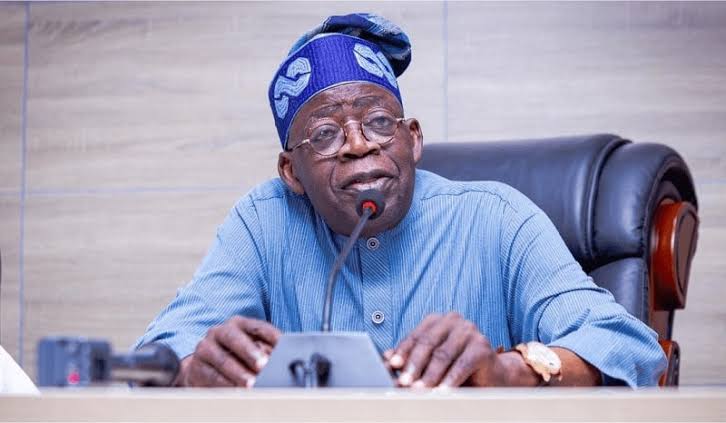
•President Bola Tinubu
In his September 19 statement, the President did not promise cheaper petrol but he said the Federal Government, the 36 states, transport unions and commercial operators were working to ensure that cheaper energy translates into lower fares. The principal instruments are compressed natural gas (CNG) and electric-powered transportation.
A commercial bus running on petrol at ₦1,450 per litre cannot suddenly operate at the same cost as it did when fuel was substantially cheaper. If the government wants fares to fall without reducing petrol prices, it has to reduce the energy cost of moving passengers—or absorb part of that cost through targeted intervention.
The administration says more than 120,000 vehicles have already been converted to CNG, supported by more than 400 certified conversion centres and over 90 CNG refuelling stations. The government has also pointed to examples where alternative-energy transport has already produced substantial fare reductions.
In Borno, the President says CNG and electric public transport services charge ₦50–₦100 on routes where commercial operators charge ₦300–₦600. In Oyo, a CNG-powered Pacesetter service reportedly reduced the Lagos–Ibadan fare from about ₦8,000 to ₦3,200. In Adamawa, alternative-energy services have cut some fares from ₦8,000 to ₦4,000, while an Abuja commuter route from Area 1 to Gwagwalada reportedly fell from ₦1,500 to ₦900 after CNG conversion.

These examples demonstrate that cheaper transport is technically possible even when petrol is expensive but they also reveal the central weakness in the October 1 target: scale. Nigeria has a huge and largely informal transport system and a few thousand CNG buses or converted vehicles cannot immediately transform the experience of tens of millions of daily commuters. Even the government's reported 120,000 converted vehicles must be viewed against the enormous size of Nigeria's commercial-vehicle fleet and the country's geographical spread.
Infrastructure is another constraint and CNG vehicles require reliable access to refuelling stations. Conversion requires upfront investment. Electric buses require charging infrastructure, electricity and maintenance capacity. And operators must actually pass their fuel savings to passengers rather than simply retain them as higher margins.
President Tinubu has explicitly told governors to work with transport unions and commercial operators, support vehicle conversion and fleet deployment, and ensure that savings from cheaper energy reach citizens through lower fares.
In other words, October 1 is not simply a petrol-price deadline. It is a delivery deadline. There is also a broader economic lesson here, if petrol remains at ₦1,450–₦1,500, Nigerians will reasonably ask how transportation can become cheaper without another form of subsidy. The government's answer appears to be that Nigeria should subsidise the transition and infrastructure—not perpetually subsidise imported or internationally exposed petrol consumption.
However, government must also be transparent about the cost, if public buses are offered at heavily subsidised fares, Nigerians should know how much is being spent, how many commuters benefit, which routes are covered and for how long. Otherwise, a lower fare may simply represent another hidden subsidy whose eventual cost is transferred to taxpayers.
There is therefore a narrow path between the promise and reality with petrol at ₦1,450–₦1,500, a nationwide reduction in transport fares based solely on petrol-powered commercial vehicles appears difficult. But a measurable reduction for more Nigerians through CNG buses, converted commercial vehicles, electric buses and targeted government support is entirely conceivable. The government's own examples show that such reductions are already occurring in selected corridors.

On October 1, Nigerians should not necessarily expect every petrol-powered bus to slash its fare overnight. They should instead expect government to demonstrate, with actual routes, fares, vehicle numbers and passenger figures, that the promised savings are reaching ordinary commuters.
After all, the credibility of the policy will not ultimately be determined by the price of petrol alone. It will be determined by the price Nigerians pay to get to work, school, markets and businesses.
At ₦1,500 petrol, cheaper transportation is possible, but achieving it nationwide by October 1 will require more than a presidential directive. It will require sufficient CNG and electric vehicles, functioning infrastructure, transparent subsidies, cooperation from operators—and evidence that the savings are actually reaching the commuter.
•Damilola Coker is a public affairs analyst.